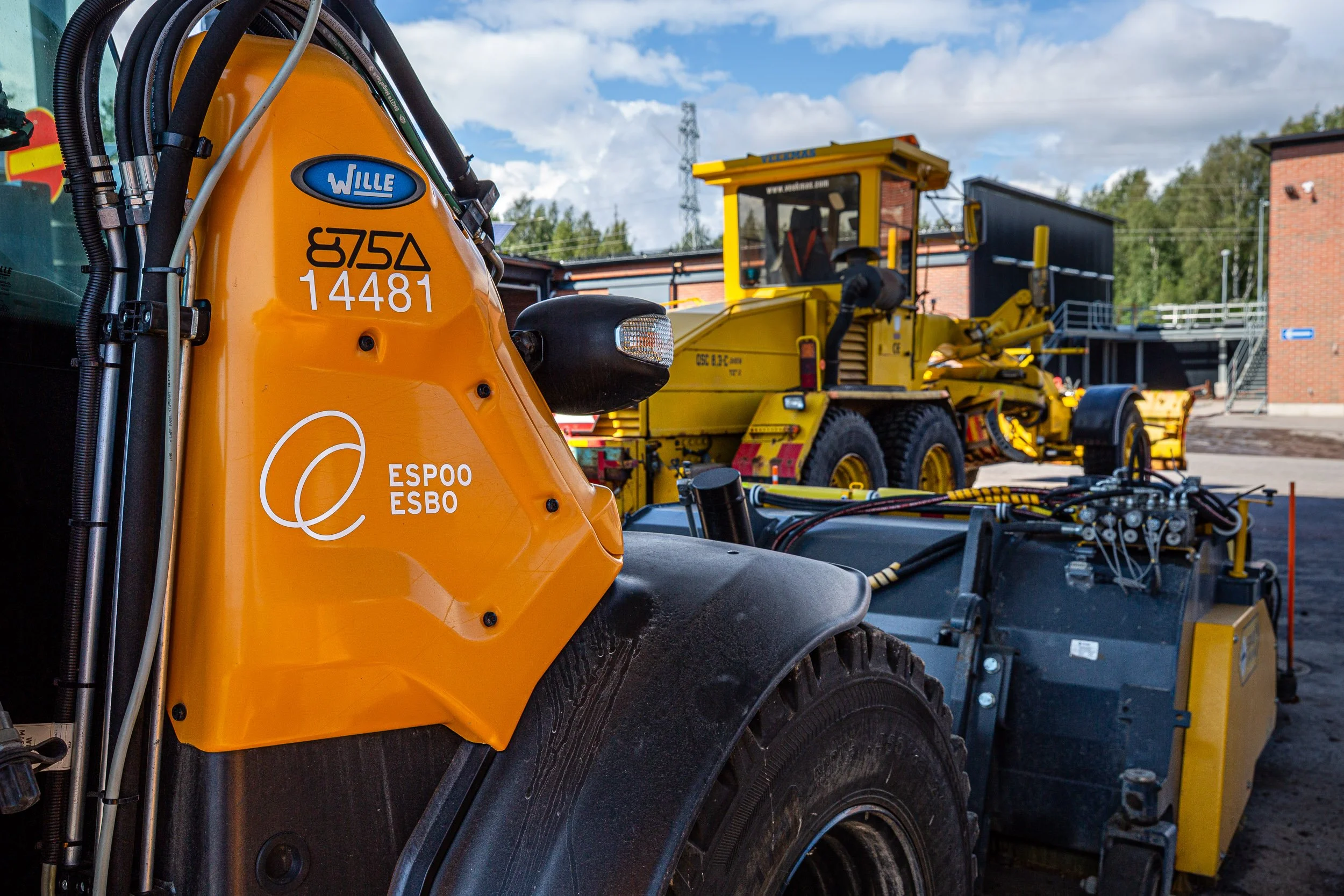
SmartFleet built a fleet management system suitable for large organisations, providing the City of Espoo with an up-to-date view, easier reporting and automated cost tracking.
When the old Access-based fleet management system started to slow down work and make reporting difficult, the City of Espoo decided to upgrade its system. SmartFleet’s state-of-the-art PRO solution was chosen as a replacement, providing an up-to-date view of the management of more than 1,300 vehicles, machines and accessories.
An up-to-date view – fleet, costs and automation together
In the new system, all city equipment and costs are itemised, including, for example, machinery accessories such as buckets. The up-to-date fleet data is always available via a web browser, without the need for separate software installations, which has made everyday life much more efficient. The system enables internal and external invoicing, cost monitoring and comprehensive reporting.
Thanks to the interfaces, data such as fuel purchase and consumption are automatically transferred to the system, without the need for separate manual transfer of files. In the future, the system will be further developed as new suppliers are brought on board and data transfer is further automated.
Cooperation and expertise reassured
SmartFleet’s project plan was clear and realistic for the client. Right from the start, it was clearly discussed which parts of the system were already complete, what still needed to be developed and the timeframe. In particular, SmartFleet’s versatile professionalism and substantive expertise are praised: “The SmartFleet team spoke the same language as us”.
Take-up exceeded expectations
From the city’s point of view, the implementation went exceptionally smoothly: “We kept to the agreed schedule and there were no delays due to the supplier, which is rare.” The system met the requirements from the start, and the usability and flexibility of the service in particular were considered successful. Direct contact with the development team increased confidence and improved communication.
The limitations of the old system, such as slow remote access and poor scalability, are now a thing of the past. Fleet management now truly supports the daily life of the city – in real time, transparently and in a controlled manner.